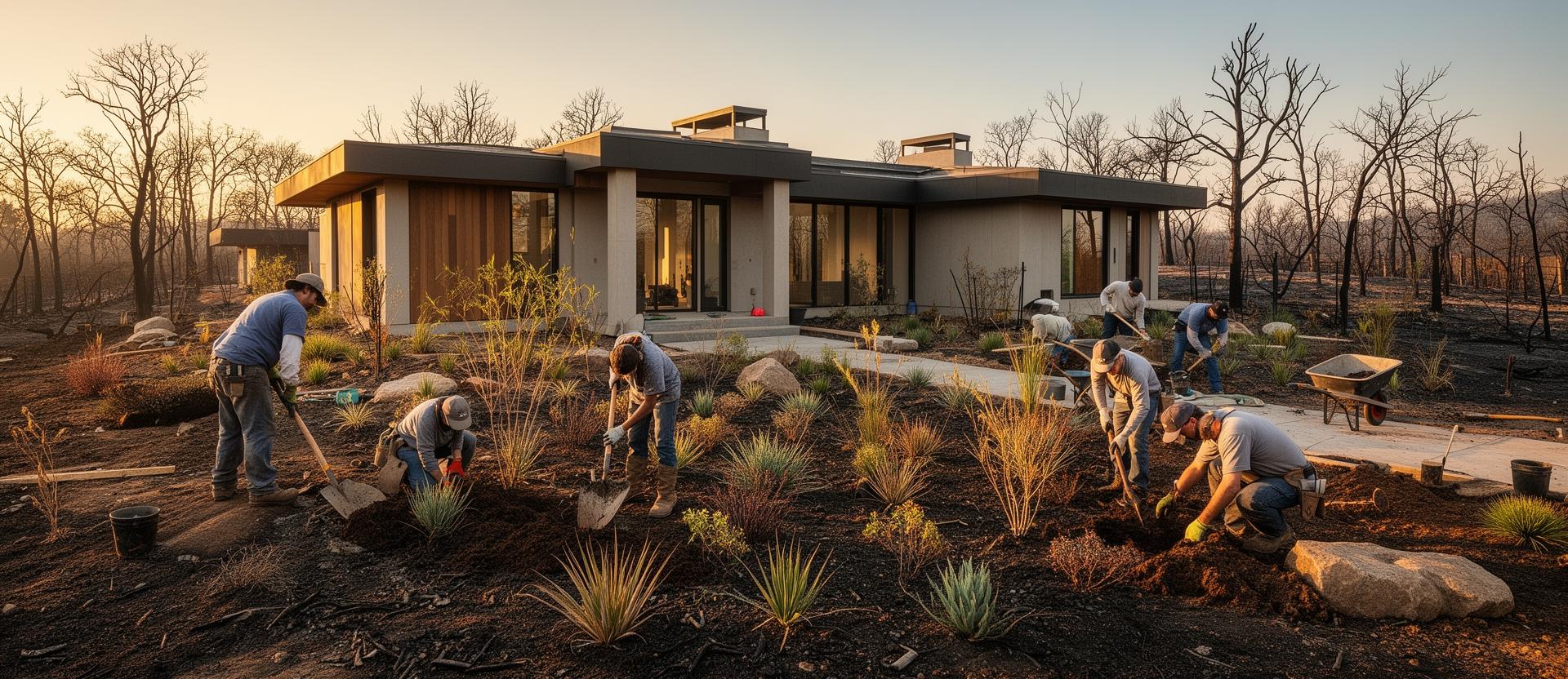
Landscaping After a Wildfire: Creating Defensible Space
Your landscaping is one of the most critical factors in protecting your rebuilt home from future wildfires. California law requires defensible space, and smart plant choices can make your property both beautiful and fire-resilient.
Understanding Defensible Space Zones
California's AB 3074 requires homeowners in fire-prone areas to maintain three distinct defensible space zones around their structures. Each zone serves a specific purpose in slowing fire and protecting your home from ember attack.
Zone 0: Ember-Resistant Zone (0–5 ft)
The area immediately surrounding your home should be hardscaped — gravel, pavers, or concrete. No combustible vegetation, mulch, or stored items. This zone is your first line of defense against ember intrusion and radiant heat.
Zone 1: Lean, Clean & Green (5–30 ft)
Low-growing, well-irrigated, fire-resistant plants spaced apart to prevent fire spread. Remove dead vegetation regularly, keep trees limbed up 6 feet from the ground, and ensure no branches overhang your roof. Use rock or gravel mulch instead of wood chips.
Zone 2: Reduced Fuel Zone (30–100 ft)
Thin trees and shrubs to create spacing between crowns. Remove ladder fuels — vegetation that allows fire to climb from the ground to the tree canopy. Group plants in small islands with breaks between them. Native California species that are naturally fire-adapted work well here.
Fire-Resistant Plants for Los Angeles
The best fire-resistant plants are high in moisture, low in volatile oils, and naturally adapted to California's climate. Here are some proven choices:
Perennial · Low water, vibrant red blooms
Shrub · Drought-tolerant, fire-resistant
Perennial · Low fuel volume, aromatic
Succulent · High moisture, very low flammability
Tree · Fire-adapted native when properly spaced
Shrub · Native California, red berries, fire-resistant
Water-Wise Fire Safety
Fire-resistant landscaping doesn't mean high water use. Native and drought-adapted plants that retain moisture naturally are often the safest choices. Drip irrigation systems targeted at Zone 1 plantings provide efficient watering while keeping vegetation healthy enough to resist fire. Avoid wood mulch — use gravel, decomposed granite, or stone mulch within 5 feet of structures.
Frequently Asked Questions
Is defensible space legally required?
Yes. California's PRC 4291 requires 100 feet of defensible space around structures in designated fire hazard areas. Failure to maintain it can result in fines and may affect your insurance coverage.
When should I start landscaping during my rebuild?
Plan your landscape design during the construction phase. Hardscaping (Zone 0) can begin as soon as exterior construction is complete. Planting is best done in fall or early spring when new plants can establish roots before summer heat.
Ready to Plan Your Fire-Safe Landscape?
We coordinate landscape planning with your rebuild to ensure your property meets all defensible space requirements from day one.
Schedule a Free Consultation