Fixed-Price vs. Cost-Plus Contracts for Your Altadena Rebuild: Who Carries the Cost Risk
The contract you sign for your Altadena rebuild does more than set a price. It decides who absorbs the cost when the work runs over budget, and after the Eaton Fire, plenty of rebuilds do. Fixed-price, cost-plus, and guaranteed maximum price contracts each split that risk differently, and the right fit depends on how settled your scope and your insurance really are.
July 6, 2026

Choosing who designs and builds your home is one decision. How that builder charges you is a separate one, and it usually gets far less attention. The pricing structure written into your construction contract, whether fixed-price, cost-plus, or a guaranteed maximum price, is what determines who is on the hook when the real cost of an Altadena rebuild lands higher than the estimate.
It helps to keep this apart from the design-build versus architect-first question, which is about who is responsible for the work. Contract pricing is about how the number is set and who carries the overrun risk. You can combine almost any delivery method with any of the pricing structures below, so treat them as two decisions, not one.
Fixed-price contracts: certainty, as long as the scope holds
A fixed-price contract, sometimes called lump sum, sets a single price for a clearly defined scope of work. You know the number before the first shovel goes in the ground, and if the builder's own labor or material costs come in higher than expected, that gap is the builder's problem rather than yours. For a homeowner who wants predictability, that is the appeal.
The catch lives in the phrase defined scope. A fixed price only holds if the plans and specifications are complete and nothing unexpected turns up. Two things routinely break that assumption on a rebuild: change orders, when you decide to alter the plan partway through, and unforeseen site conditions, which are common on a fire lot. Both move the fixed number, so how your contract handles them matters as much as the price on the first page.
Fixed-price also lines up cleanly with insurance, since your carrier settles the dwelling claim against a defined replacement scope that a fixed price for that same scope can be reconciled against.
Cost-plus contracts: transparency that puts overruns on you
In a cost-plus contract you pay the actual cost of labor and materials plus the builder's fee, set either as a fixed dollar amount or as a percentage of the costs. Every expense is visible, and you are not paying a padded number built to cover the builder's risk. When the scope genuinely cannot be pinned down in advance, that openness has real value.
The tradeoff is that the overrun risk moves from the builder to you. If materials cost more or the job runs long, you pay the difference. A pure cost-plus contract with no ceiling is open-ended by design, which is why homeowners who use it often insist on a not-to-exceed figure. Percentage-fee versions carry a second issue: the fee rises as the cost does, so the incentive to hold costs down is weaker than you might want.
Guaranteed maximum price: the middle path
A guaranteed maximum price, or GMP, is cost-plus with a cap. You still pay actual costs plus a fee, and you still see every line item, but the contract sets a ceiling the total cannot cross without your written approval. If the project comes in under the cap, the savings are commonly returned to you or split on terms you agree to up front.
For many Altadena rebuilds this is the practical compromise. It gives you the cost transparency of cost-plus and a version of the certainty of fixed-price, without forcing the builder to guess at unknowns and pad the bid. When the scope is mostly settled but a few large questions remain, a GMP tends to fit better than either extreme.
Why the Eaton Fire makes scope hard to fix up front
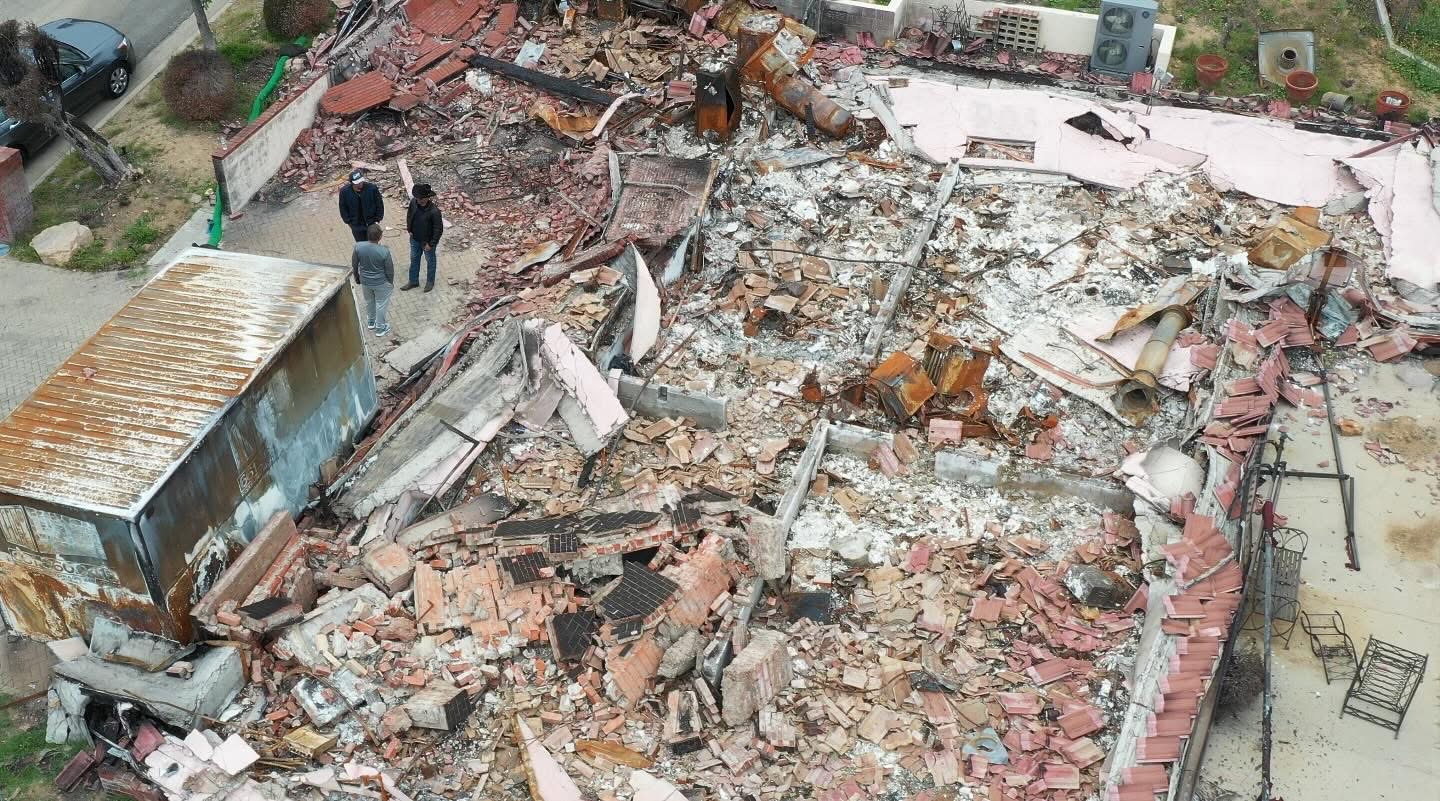
The reason contract structure matters more on a rebuild than on a routine remodel is that fire lots tend to hide their surprises. The condition of a surviving foundation is not fully known until an engineer tests it. Soil may need remediation that does not surface until it is sampled. New utility connections can run into Southern California Edison's undergrounding work, and current code, including Chapter 7A fire-hardening, can require upgrades the old house never had.
Each of those is a classic driver of change orders. A rigid fixed price with no contingency and vague change-order language can crack the first time one appears. A pure cost-plus with no cap can drift well past what you can afford. This is exactly the environment a guaranteed maximum price, or a fixed price with a clear contingency line, is built to handle.
What California law requires no matter which you choose
Some protections do not depend on the pricing model at all. California requires a written contract for home improvement work priced above $500, and the payment schedule has to state each payment in dollars and cents and spell out the work or materials that payment covers. You should not be paying meaningfully ahead of the work actually completed.
The down payment is capped by law. California's Contractors State License Board limits it to $1,000 or 10 percent of the contract price, whichever is less. On a full rebuild running into the hundreds of thousands of dollars, that means the legal down payment is effectively $1,000, not 10 percent. The main exception is a contractor who carries an approved payment and performance bond, which protects you if the work is not finished and lets them exceed the cap. A request for a large deposit with no bond behind it is a warning sign regardless of the contract type.
How to decide which fits your rebuild
Start with how settled your project really is. If your plans and specifications are complete and your insurance scope is locked, a fixed-price contract gives you the cleanest certainty. If real unknowns remain, and on most fire lots they do, a guaranteed maximum price gives you transparency with a ceiling you can plan around. Reserve pure cost-plus for a builder you already trust, and even then ask for a not-to-exceed number.
Whichever structure you lean toward, put the same questions to every bidder in writing: how do you handle unforeseen site conditions, how are allowances set and later reconciled, and what does your change-order process look like. The answers reveal more about your future cost exposure than the headline price does. And whatever you sign, make sure it maps to how your insurer releases funds, so the contract and the coverage are working from the same scope.
For Eaton Fire homeowners weighing these contract structures in Altadena, the team at 1st Choice Design and Development is glad to walk through your plans, your insurance position, and where the real unknowns on your lot are likely to sit. Which structure fits usually becomes clear once those pieces are on paper together.

.jpeg)




.jpeg)