Septic Systems in an Altadena Rebuild: When You Can Keep Yours and When You Must Connect
Many older Altadena homes sit on a private septic system or an older cesspool rather than a public sewer line, and a lot of homeowners assume the fire changed nothing about that. The rebuild is actually where the County takes a fresh look at your wastewater system, and what you are allowed to keep depends in large part on how much bigger you build.
June 29, 2026
Many of the homes that burned in Altadena were built decades ago, and a good number of them were never connected to a public sewer. They handled wastewater on site, through a septic tank or, on the oldest properties, a cesspool buried somewhere in the yard. If that describes your lot, your wastewater system is one of the parts of an Altadena rebuild worth sorting out early, because the County takes a fresh look at it when you pull a permit.
The question is not simply whether your old system survived the fire. It is whether LA County will let you rebuild on it, whether you will be asked to upgrade it, and whether a public sewer connection is now on the table. The answer turns on two things: how close a usable sewer line is, and how much wastewater your new house will produce compared to the one you lost.
How the County decides between keeping your system and connecting to sewer
LA County publishes specific guidance, often described as a septic to sewer determination, for owners rebuilding on a property that was not on the public sewer. The first question is whether a public sewer is actually reachable from your lot. The connection has to run within the public right of way or your own frontage, because the County will not approve a sewer pipe that crosses a neighboring property line to reach the main. If the nearest sewer can only be reached across someone else's land, connecting is generally not an option, and an onsite system stays in the picture.
Where a sewer is close enough to reach, the County leans toward requiring the connection rather than approving repairs or modifications to an old septic system. Where no reachable sewer exists, you rebuild on an onsite system that meets current standards. That basic split decides which path your project is on before you get into the details of the system itself.
A like-for-like rebuild protects your options, a bigger house narrows them
If you rebuild close to what you had and do not increase the potential wastewater flow, you have the best chance of keeping a functioning existing system, after the Department of Public Health evaluates it for health and safety. Staying within your old bedroom count and footprint is what keeps that flow calculation flat.
The moment you increase the flow, the rules change. Adding a bedroom, enlarging the house, or adding an accessory dwelling unit can push the property into the upgrade requirements identified by the State Water Resources Control Board. This is the part homeowners tend to miss: the decision to add a room or a second story is also a decision about your septic system, and the cost of upgrading an onsite system can land in a budget that never planned for it. It is worth weighing that tradeoff before the design is final.
If your property has a cesspool
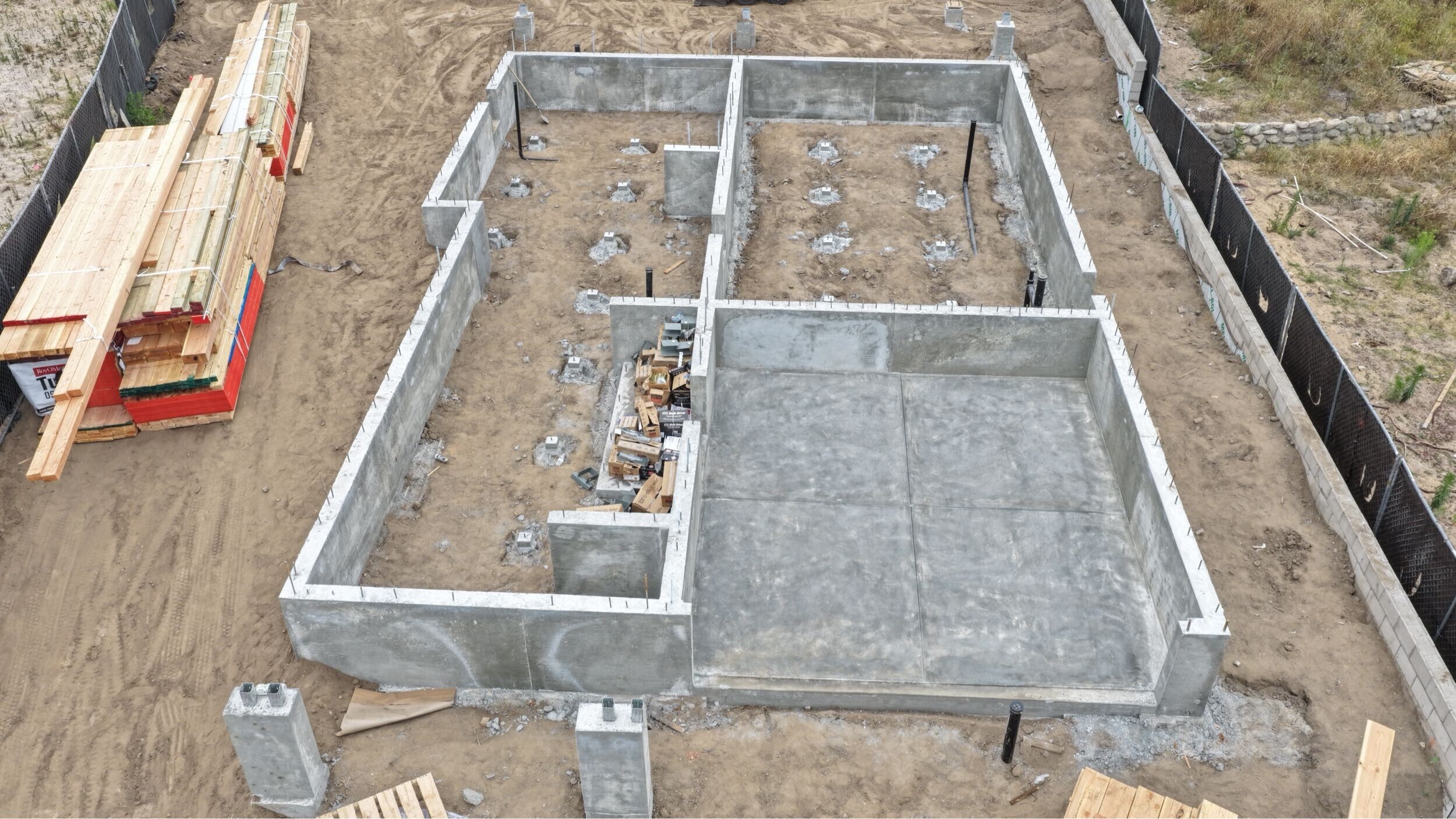
Cesspools are the older technology, essentially a pit that received waste without the treatment a modern system provides, and many of the oldest Altadena lots still have one. The County does not automatically condemn them. There is an established path to convert an existing cesspool into a seepage pit connected to a new septic tank, forming a conventional onsite wastewater treatment system, provided the old structure is found to be structurally sound and in good repair. The Department of Public Health makes that determination after an evaluation, so the first practical step is finding out what you actually have in the ground and what condition it is in.
The covenant that lets you rebuild now and connect later
For many Altadena properties, a public sewer is something that may arrive in the future rather than something available today. To keep those rebuilds moving, the Department of Public Health's Environmental Health division offers a recorded Covenant and Agreement for owners who anticipate eventually connecting to a sewer. Signing it can allow a homeowner to install a conventional onsite system now without the usual requirement to test and reserve a full future expansion area, as long as the system is properly operated and maintained.
The covenant is a recorded legal document, not a form you file and forget. You complete and notarize it, record it with the Los Angeles County Registrar-Recorder and County Clerk, and give a recorded copy to Public Health before the project receives final approval. It commits the property, including future owners, to connecting once a sewer becomes available. For many homeowners that is a reasonable trade, but it is worth reading closely, because you are recording an obligation against your title.
Why settling this early saves you later
Wastewater clearance is one of the agency sign-offs your permit set needs, alongside the building, grading, and utility approvals. Because it can involve a site evaluation, a possible system upgrade, and in some cases a recorded covenant, it is not something you want to run into halfway through plan check. Sorting out your septic situation while the design is still flexible lets you fold any upgrade cost into the budget and keeps a wastewater question from stalling an otherwise approved set of plans.
What to do next
Start by confirming what your property actually has and what condition it is in, which means having the Department of Public Health evaluate the existing system. Find out whether a usable public sewer exists in your frontage or the public right of way, since that determines whether a connection is even possible. Then look hard at your design: if you are staying close to your old footprint, you have room to keep an onsite system, and if you are growing, plan for an upgrade. Public Health's Environmental Health division takes questions at (626) 430-5380 or dlanduse@ph.lacounty.gov, and it is the office that ultimately signs off.
If you are weighing a septic upgrade against a sewer connection on your Altadena rebuild, the team at 1st Choice Design and Development is glad to look at your specific lot, your existing system, and how your design affects wastewater flow. Getting the wastewater path settled early tends to remove one of the bigger unknowns from the project.

.jpeg)




.jpeg)