Zone 0 on Your Altadena Rebuild: The Ember-Resistant Five Feet Your Blueprints Do Not Cover
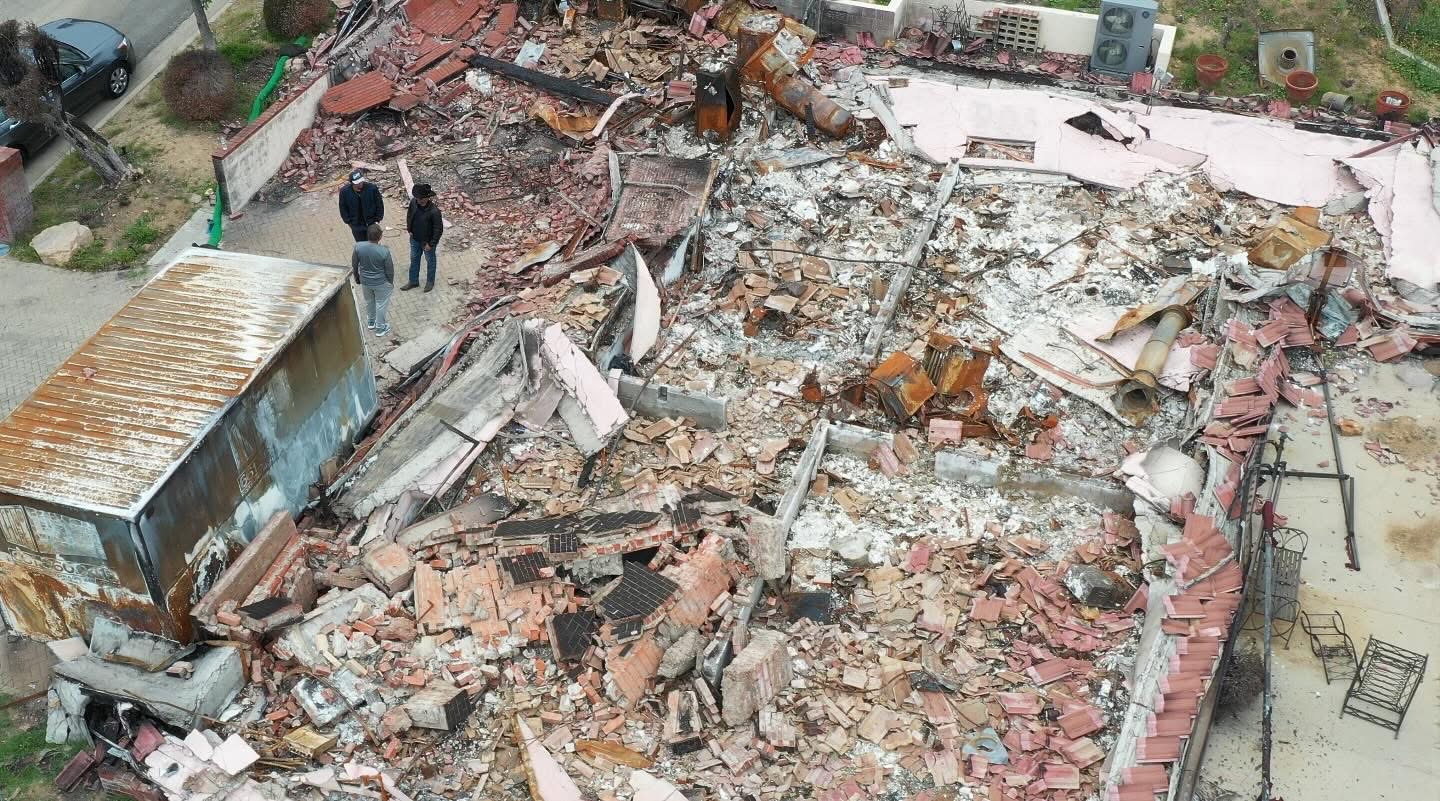
Most Altadena homeowners rebuilding after the Eaton Fire are focused on hardening the house itself: the roof, the vents, the siding. Fewer are thinking about the five feet of ground right around it. That band, called Zone 0, is where wind-driven embers do most of their damage, and California is finalizing rules that will make it part of your rebuild.
July 1, 2026
The fire protection in a set of rebuild plans is built into the house itself: a Class A roof, ember-resistant vents, noncombustible siding, tempered glass. Those plans stop at the walls. The ground just outside them, the first five feet of soil, plants, and hardscape, is governed separately, and in a wind-driven ember event that strip is often what decides whether the house survives.
That band is called Zone 0, and California is turning it into a formal requirement for fire-area construction. For an Altadena rebuild starting from bare dirt, it is far cheaper to design Zone 0 in from the start than to tear out finished landscaping later. Here is what the zone is, how it differs from the hardening already in your plans, and what it asks of the five feet closest to your walls.
What Zone 0 actually is
Zone 0 is the ember-resistant zone covering the first five feet around a structure, measured out from the exterior walls and any attached deck. It is the innermost of California's three defensible space zones, ahead of Zone 1 at five to thirty feet and Zone 2 at thirty to one hundred feet. The closest band gets its own category because of how homes burn: most houses lost in a wildfire are taken not by a wall of flame but by wind-driven embers that land against the building, find something combustible, and smolder into ignition.
The legal basis is Public Resources Code 4291, amended by AB 3074 in 2020 and SB 504 in 2024, which directed the state to create the Zone 0 ember-resistant zone, and Governor Newsom's Executive Order N-18-25 told the Board of Forestry and Fire Protection to finish the rules. The requirements apply to property in the State Responsibility Area and to the Very High Fire Hazard Severity Zone within local jurisdictions, the category that reaches into parts of unincorporated Altadena.
How it differs from the hardening in your plans
It is easy to assume Zone 0 is already handled by the fire-hardening in your construction documents, but the two are separate. Chapter 7A of the building code governs the building assembly: the roof covering, the vents, the exterior walls, the windows, and the underside of eaves and decks. Zone 0 governs what you place in the ground around that assembly: the plants, the mulch, the fencing, and the items you set down and store there once you move back in.
That distinction matters because the five-foot band tends to fall between the people working on your project. The architect draws the house, the landscape designer draws the yard, and the strip right against the foundation can end up as no one's clear responsibility. On a fire rebuild it deserves deliberate attention, because it is both a likely permit requirement and the most important ground for keeping embers off your new walls.
What the rules ask for in the first five feet
The governing idea is straightforward: nothing in the first five feet should be able to catch an ember and hold a flame against the house. In practice that starts with the ground cover. Wood bark and shredded mulch, the default in most Southern California yards, are exactly what the zone is meant to remove, because bark against a foundation is one of the most reliable ember traps. The replacement is noncombustible: gravel, decomposed granite, pavers, or plain mineral soil.
It also means keeping woody plants and dense shrubs out of that band, or limiting them to small, well-spaced, well-irrigated plantings kept clear of dead growth. Fences get specific attention, because a wood fence burning up to the wall works like a fuse leading fire to the house, so where fencing meets the structure the section inside the zone should be metal or another noncombustible material. The zone also has to stay clear of the movable things that collect against a house: firewood, trash and recycling bins, door mats, patio cushions, and the dead leaves and needles that gather in corners and under stairs.
Where Altadena rebuilds stand right now
As of 2026 the Zone 0 regulation is still being finalized. The Board of Forestry was directed to complete its rulemaking by the end of 2025, but the work has run longer, with public workshops and revised drafts continuing through 2026. As the drafts are written, new construction would have to show Zone 0 compliance during building permit review, while existing homes would be phased in over several years with an emphasis on education rather than immediate penalties.
There is also a mapping detail worth understanding. The requirement is tied to the Very High Fire Hazard Severity Zone, and when the state updated its maps in 2025 those areas grew across Los Angeles County but did not cover the entire Eaton Fire footprint. Reporting on the new maps found that only about a fifth of the parcels inside the Altadena burn area landed in the Very High category. Whether Zone 0 is strictly mandatory on your lot therefore depends on where your parcel falls, but the fire itself showed that embers do not stop at a zone line, so building the ember-resistant band in makes sense for any rebuild here.
Designing it in now rather than retrofitting later
The advantage of a rebuild is that you are starting from cleared ground, the cheapest moment there will ever be to get the first five feet right. A noncombustible perimeter can be drawn straight into the site plan: a gravel or paver band against the foundation, drainage that does not rely on bark mulch, and a fence layout that switches to metal as it approaches the walls. Handled at the design stage, this adds very little. Retrofitting it later, after the yard is planted and mulched, means paying to pull out work you already bought.
It is worth naming the five-foot band out loud with both your builder and whoever designs the landscaping, so it does not slip through the gap between them. Defensible space and home hardening also feed into the California Department of Insurance's Safer from Wildfires framework, which carriers weigh when writing policies, so a well-executed Zone 0 can matter beyond the building counter.
For Eaton Fire homeowners planning an Altadena rebuild, the team at 1st Choice Design and Development is glad to walk through how the first five feet fits into your site plan, your budget, and the permit path for your particular parcel. It is a small strip of the lot that carries a large share of the risk, and it is much easier to handle now than after the landscaping goes in.

.jpeg)



.jpeg)