Living on Your Altadena Rebuild Lot in an RV: The Temporary Housing Permit It Requires
Many Altadena homeowners watching their rental coverage run down have the same thought: why keep paying to live across town when the lot is right there. Moving a trailer or RV onto your own property during the Eaton Fire rebuild is allowed, but not by simply parking one on the dirt. LA County treats it as a permitted use called temporary housing, and the permit has to come first.
July 13, 2026

If you are rebuilding in Altadena after the Eaton Fire, the math on temporary housing gets harder every month. Rent in the area is high, the insurance coverage that pays for a rental is not open-ended, and the finished house is often still a year or more away. Standing on your own cleared lot, it is natural to ask why you cannot just put a trailer there and live on the property while the work goes up.
You can, and a number of families already have. What catches people off guard is that Los Angeles County does not treat a trailer on a burned lot as parking. It treats it as a use of the land that needs its own permit, and homeowners who skipped that step have been told to move the unit or have been cited. This post walks through the temporary housing permit the County requires, what it takes to get one, and how to think about whether living on your lot is the right move for your Altadena rebuild.
What the County Means by Temporary Housing
Los Angeles County lets you apply for a Disaster Recovery Permit for what it calls a temporary housing unit. That unit can be a manufactured home, a mobilehome, or a recreational vehicle placed on your property. You qualify if you lived in a legally established single-family residence, accessory dwelling unit, or caretaker's residence on that lot, and the disaster destroyed it or made it uninhabitable. The one hard placement rule the County states up front is that the unit cannot sit on any existing debris field.
This is different from a temporary housing community, which is a group site with shared infrastructure that the state authorized through Executive Order N-9-25 and which has to close by January 16, 2028. The path most Altadena homeowners are asking about is the single unit on their own lot. It also matters that Altadena is unincorporated, so this is the County's process. If your property sits inside Pasadena, the City of Los Angeles, Sierra Madre, or Malibu, you apply through that city instead.
Debris Clearance Comes Before the Permit
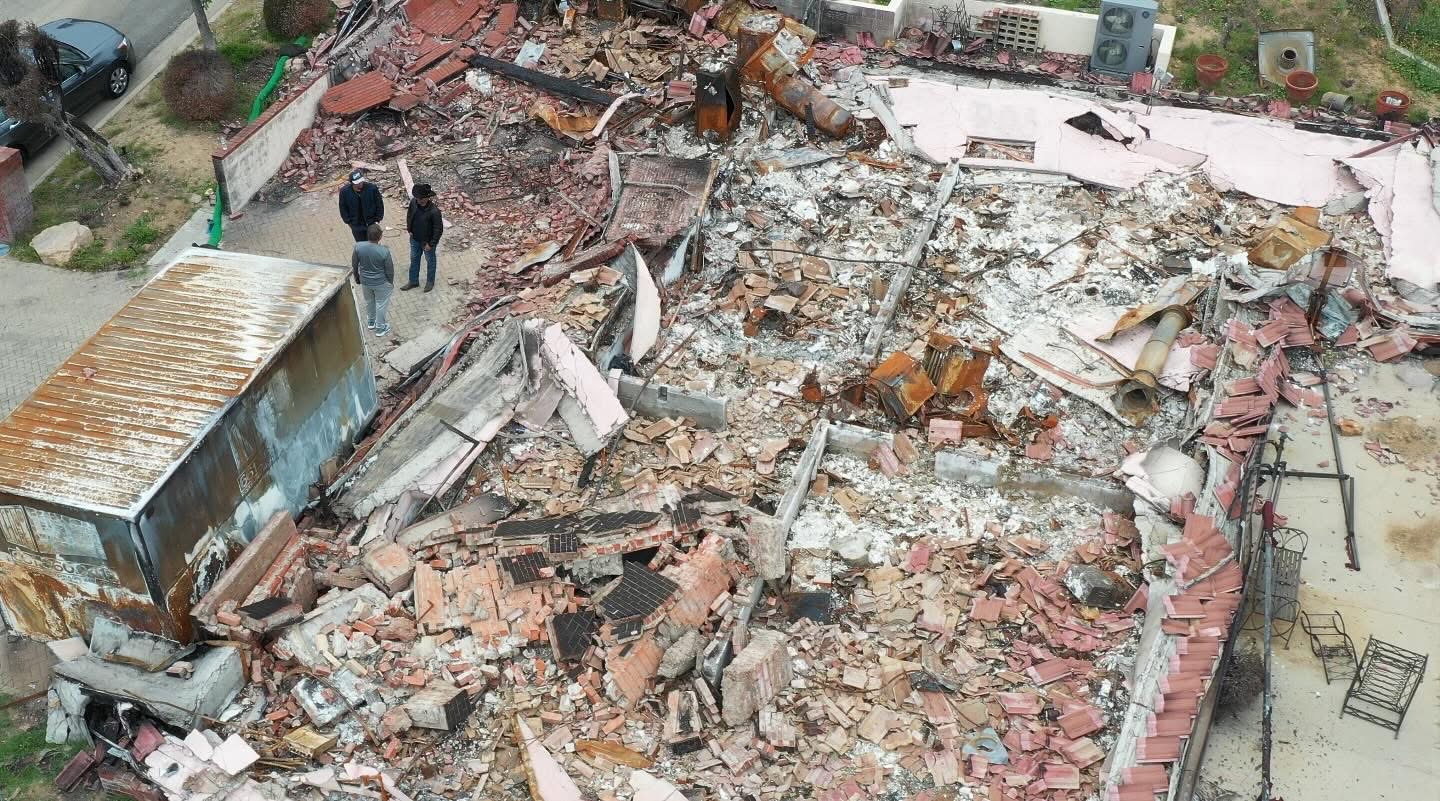
Because the unit cannot be placed on a debris field, site clearance comes first. That means the two-phase cleanup most Altadena lots have already been through: the EPA's removal of household hazardous materials, followed by fire debris removal handled by the Army Corps of Engineers or an approved private contractor. The County wants proof the lot has been cleared before it will issue the temporary housing permit.
The useful wrinkle is timing. You do not have to wait until every clearance sign-off is in hand to begin. The County accepts temporary housing applications when you are ready and reviews them alongside the clearance work, then issues the permit once clearance is complete. Getting the paperwork moving early is worth doing.
Proving the Lot Was Your Home
The permit is meant for people rebuilding their own homes, so you have to document that you lived there. County guidance points to having lived in the residence within the year before the emergency was declared, shown with something ordinary like a driver's license, a property tax bill, or a utility bill in your name at that address. Gathering those before you apply saves a round trip.
There is also a rule specific to the hardware. If your temporary unit is a manufactured home or a mobilehome, the County requires it to have been built after 1975. A travel trailer or RV does not run into that cutoff, which is part of why RVs are the common choice for a short stay on the lot.
The Review Is About Health and Safety
A temporary housing application is not a rubber stamp. The County routes it to Regional Planning, Public Health, and Building and Safety for review, and inspections may be required before you move in. Public Health is the reason the process exists in the shape it does. A unit that people are going to sleep, cook, and bathe in needs a safe answer for water, for sewage, and for power, even on a lot that is otherwise an active construction site.
That is the practical reason you cannot simply park an RV and run an extension cord. The review is confirming that the temporary setup will not create a sanitation or fire problem on a block where crews and other rebuilds are working. Planning how the unit will connect to water, waste, and electricity, and walking it through with your contractor, is what turns the idea into something the County can approve.
How to Apply, and the Window You Are Working Against
Applications go through the County's EPIC-LA online portal or in person at a field office, and the County has said temporary housing applications are expedited. The bigger thing to watch is the calendar. County Planning has generally asked that temporary housing applications be submitted within two years of the emergency declaration, which for the Eaton Fire points to early 2027. Deadlines in this recovery have shifted more than once, so confirm the current date with Planning rather than assuming, but treat the window as real and closing.
On cost, the County has a program to defer and refund many rebuild permit fees for eligible fire survivors. Whether a temporary housing permit falls under that program is worth asking directly when you apply, rather than budgeting around an assumption either way.
Deciding Whether On-Lot Living Fits Your Rebuild
Living on your lot is not automatically the cheaper or easier path. It depends on the lot: whether there is room for a unit clear of the construction footprint, whether the driveway and access still work, and whether water, waste, and power can be brought to it safely. It also depends on your timeline, since the temporary housing permit runs on its own track alongside your rebuild permit and is worth weighing against how many months of rent it would actually replace. On some lots, building an accessory dwelling unit first and living in that is a sturdier version of the same idea, because it becomes a permanent part of the property once the main house is done.
For Eaton Fire homeowners weighing whether to live on their Altadena lot during the rebuild, the team at 1st Choice Design and Development is glad to look at your specific lot, utilities, and timeline and talk through the options. It tends to get clearer once the trailer, the permit, and the build schedule are lined up side by side.

.jpeg)



.jpeg)